About Me
Results-driven Senior Quality Assurance Leader with over 15 years of experience directing cross-functional teams, establishing testing best practices, and building high-performance automation frameworks.
Proven track record of reducing test execution effort by up to 75% and accelerating release cycles through robust framework engineering and strategic test planning.
Expert in aligning QA strategy with business objectives, managing comprehensive system integration testing, and mentoring engineering teams to achieve technical excellence across Agile and Waterfall environments.
I am a software quality professional specializing in test governance, strategic planning, and team leadership. Over my career, I have focused on helping engineering organizations scale by establishing rigid automation frameworks and mentoring cross-functional squads to follow strict engineering best practices.
Core Competencies
Professional Experience
Download Full Resume (PDF)Senior QA/Test Lead
2011 — PresentWalgreens Inc
- Led system integration testing initiatives across multiple projects, collaborating with cross-functional teams to ensure high-quality releases and on-time delivery.
- Designed and implemented an enterprise automation framework using Cucumber, .NET, and Node.js, reducing test execution effort by 75%.
- Developed test data management solutions that reduced end-to-end testing preparation time by 25%.
- Created automation tools that improved team productivity by 30% and streamlined testing workflows.
- Provided technical leadership, mentoring automation engineers and driving best practices across teams.
- Increased automation coverage to 90%, significantly reducing manual verification effort and accelerating release cycles.
- Coordinated multi-team testing efforts across 3 global regions, improving cross-functional release predictability by 35%.
- Mentored junior QA engineers and guided dev teams to adopt modern test automation metrics, successfully lowering regression cycles from days to hours.
- Owned the end-to-end strategic testing plans for high-availability enterprise services.
Automation Lead / Technical Lead
2009 — 2011Microsoft Corp
- Developed automation solutions for Microsoft Influencer Network initiatives.
- Built tools and components supporting Microsoft Certification examinations.
- Modernized legacy applications using .NET technologies and improved maintainability.
- Designed and implemented test automation frameworks and reporting portals.
- Developed web services and automation utilities to improve engineering efficiency.
Technical Lead
2006 — 2008Microsoft Corp
- Enhanced existing automation frameworks by introducing scripting capabilities and reusable libraries.
- Developed automated testing solutions for Office Communication Server and SharePoint features.
- Created reporting and defect-tracking portals to improve project visibility and collaboration.
- Automated virtual machine provisioning and test execution processes.
Earlier Career
1995 — 2006- Progressed through Technical Lead, Systems Analyst, Software Engineer, Group Leader, and SDET roles.
- Developed enterprise software solutions, test automation frameworks, and quality engineering initiatives.
Featured Case Studies
Grandeur Properties
A Microsoft Fabric case study in wildcard ingestion, upsert integrity, audit trails,and pipeline orchestration for an ultra-luxury real estate firm operating across three currencies.
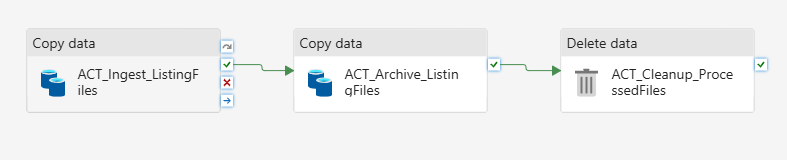
Challenge: Three files, one per office, sit in isolation every morning until a junior analyst manually downloads and consolidates them. By the time leadership receives a unified view, the data is already hours old and the morning deal meeting has begun without the full picture. In an industry where the difference between closing a deal and losing it to a competitor is measured in hours, that gap is the entire problem. Pipeline Data Ingestion Data Archival Data Cleanup Visual map of our data ingestion, archival and cleanup process
Action:
Ingest and Validate
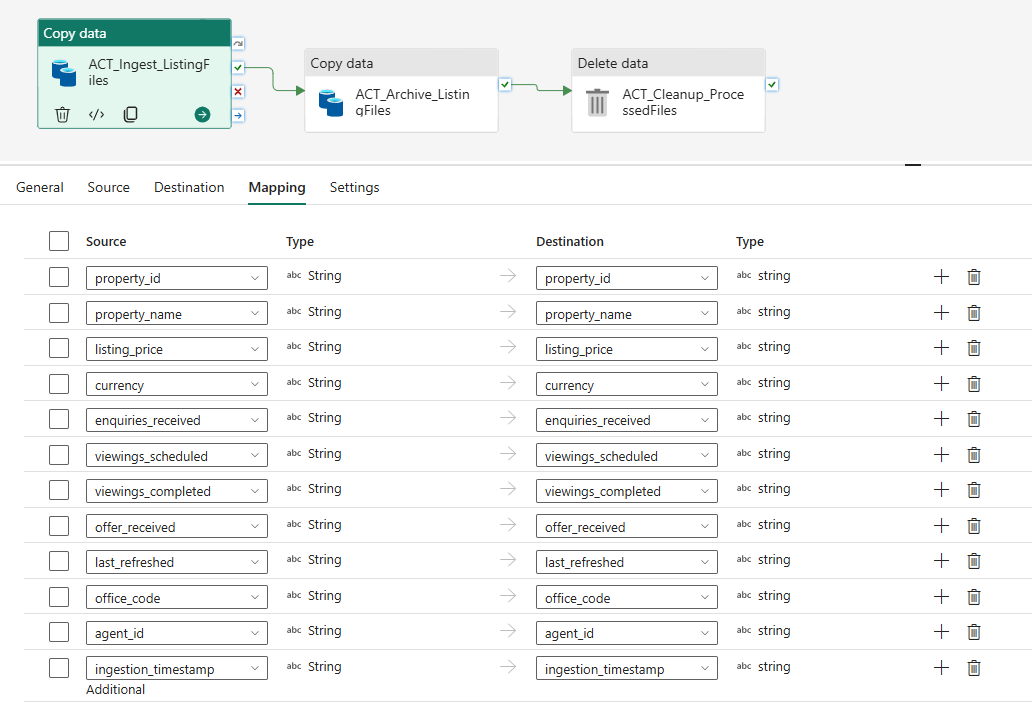
Deploy the Copy Data activity with wildcard ingestion, column mapping, PII exclusion, upsert write mode, and ingestion timestamp. Run the pipeline manually against the Day 1 files for all three offices. Validate row counts in the Silver table and confirm the.
Upsert Verification
Replace the Day 1 files in "Files/raw/" with the Day 2 files. Run the pipeline manually again. Verify that updated records reflect new values from Day 2 and that the total row count remains at nine. No new rows should be inserted. Only changed fields should reflect new values.
Archive, Delete and Schedule
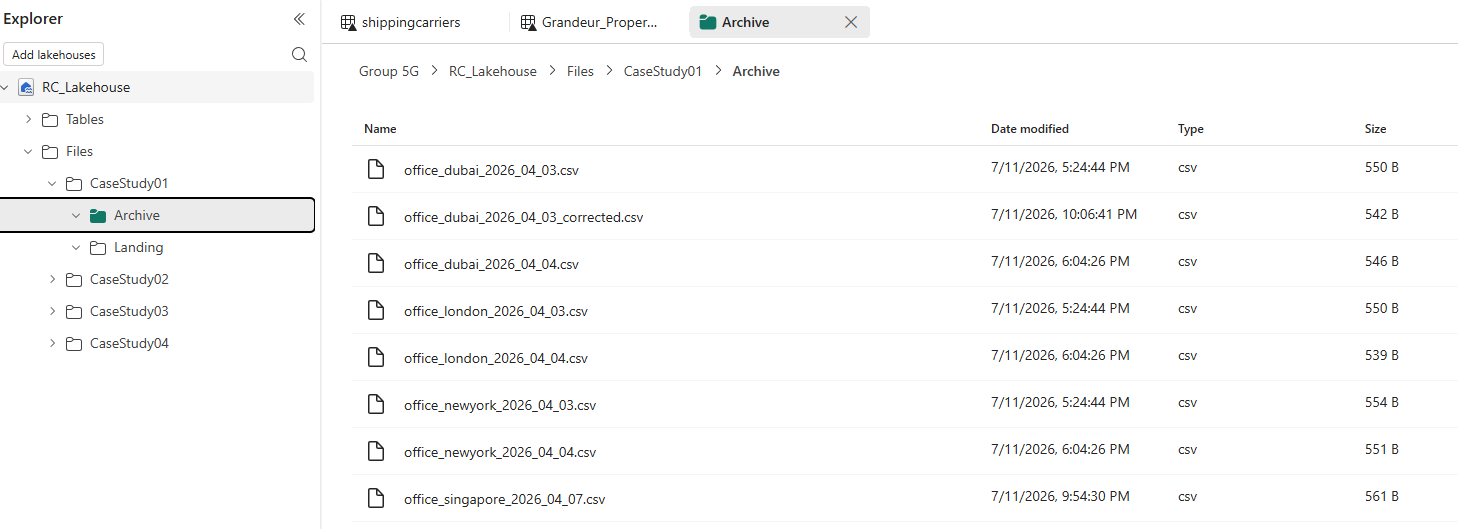
Add the Archive activity to copy all processed files from "Files/raw/" to "Files/archive/" on success. Add the Delete activity to remove all files from "Files/raw/" after archival is confirmed. Schedule the pipeline to execute daily at 6:00 AM UTC.
Result:
📷 View Framework Architecture Diagram



Global Freight Forwarders
A Microsoft Fabric case study in watermark-based incremental ingestion, Delta Lake ACID writes, and the operational discipline of letting the pipeline remember what the analyst no longer needs to.
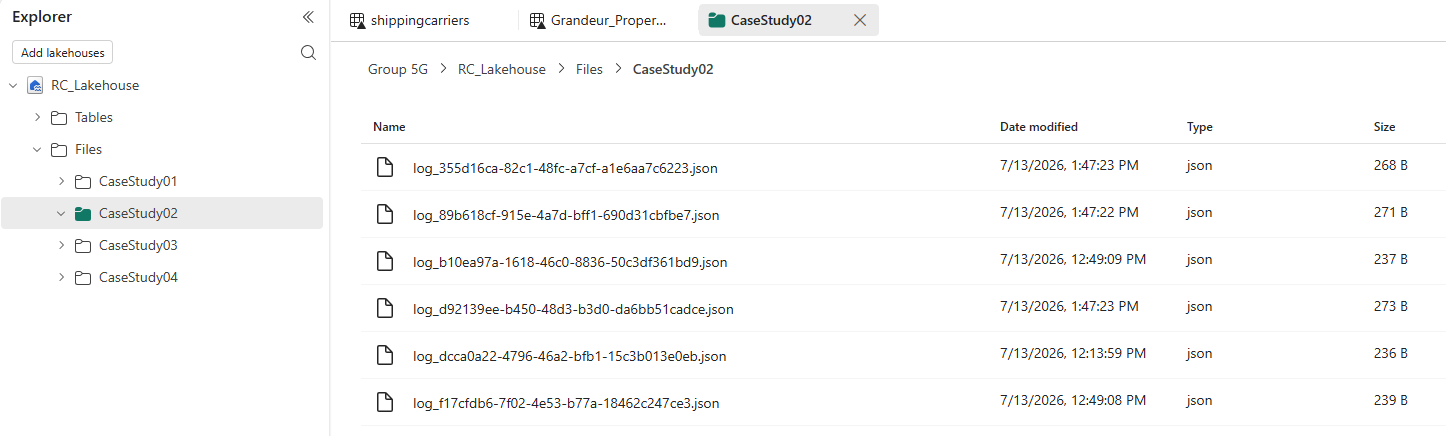
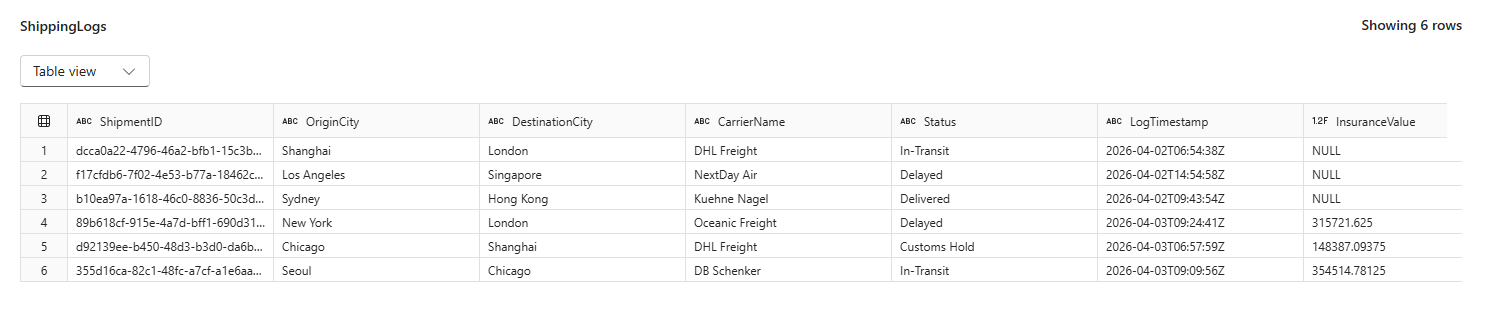
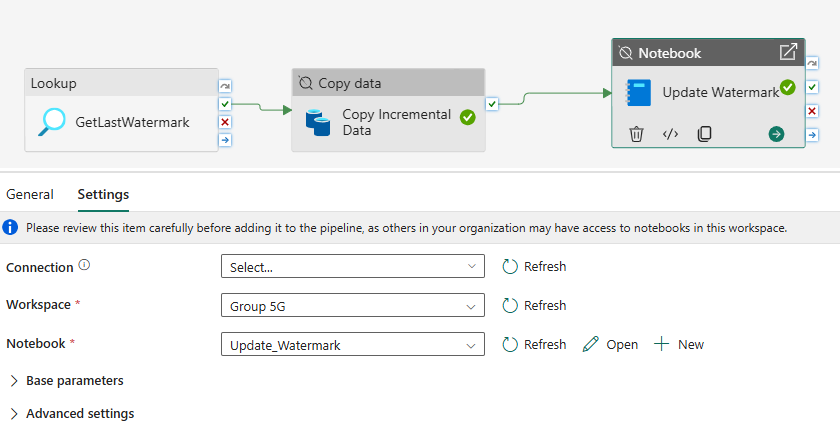
Challenge: Every problem in the current workflow traces back to the same architectural absence: there is no record of state. The pipeline does not know what it processed yesterday, so it cannot reason about what is new today. Every morning is a fresh manual judgement call. Four distinct symptoms emerge from that single missing capability. You are the Lead Data Engineer at GFF, reporting directly to David Rodriguez. Your mandate is to build the pipeline within Microsoft Fabric. The pipeline must automatically ingest net-new shipment log files every morning without manual intervention, append them to the ShippingLogs Delta table, and leave the system in a state that ensures the next run picks up exactly where this one ended. Data Source Pipeline Data lookup Data copy Watermark update Data Archival Data Cleanup Visual map of our data ingestion, archival and cleanup process
Action: The destination is the Tables section of the GFF Lakehouse, where data is stored as a Delta table named "ShippingLogs". Delta Lake provides ACID guarantees: Atomicity, Consistency, Isolation, Durability. Every write either succeeds completely or fails completely. There are no partial or corrupt states. Each write is recorded in an immutable transaction log, creating a full history of the table that can be queried, audited, and if necessary, restored to any prior version..
Result: A Lakehouse architecture using Delta Lake within Microsoft Fabric. The pipeline operates with state awareness, maintaining a record of exactly which files have been processed and using that record to filter only net-new files on each subsequent run. The mechanism is a watermark, stored in a dedicated Delta table that advances with each successful pipeline execution.
📷 View Framework Architecture Diagram



City of Metropolis
A Microsoft Fabric case study in dynamic ingestion routing, metadata-driven control flow, and the operational discipline of active file management for a federated municipal data estate.
Challenge: A municipal data platform team is building a world-class lakehouse on a foundation of manual triage. Files arrive misnamed. Files become digital ghosts. A clerk's typo can take the Mayor's dashboard dark. The City of Metropolis is at a critical juncture in its digital transformation. Under the Metropolis Forward initiative, the city has consolidated its disparate data sources into a central cloud-based landing zone. That success has introduced an unforeseen operational crisis: the automated promise of a unified data lakehouse is being throttled by a manual, fragile, and ungoverned triage process. Pipeline Visual map of our data ingestion, archival and cleanup process
Action:
The mandate is not to build a pipeline. It is to build a piece of platform infrastructure that other engineers, other departments, and future use cases will all depend on without thinking about. The right architecture absorbs new sources without modification. The wrong one is rebuilt every time the city adds a department.
Result:
📷 View Framework Architecture Diagram
Innovate Solutions
A Microsoft Fabric case study in incremental Bronze-to-Silver pipeline design, PySpark transformation logic, quarantine-driven data quality, and the operational discipline of accounting for every record that enters the lakehouse.
Challenge: A technology consulting firm runs its workforce reporting on manual SQL exports and Excel spreadsheets. Forty-eight hour turnarounds. Five duplicate employee_ids. Eighteen invalid salaries. The lab moves the data from a well-maintained Azure SQL source through a Bronze-Silver lakehouse, producing one clean record per employee that HR can actually trust. HR teams resort to ad-hoc SQL exports, manual cleaning in Excel, and emailed spreadsheets. The process introduces errors, creates version conflicts, and exposes employee PII with no governance or access controls. Pipeline Visual map of our data ingestion, archival and cleanup process
Action:
Three regional hubs. One source system that is doing its job correctly. One workflow downstream of it that is not. The whole modernisation reduces to building the missing engineering layer: a Bronze landing zone for the truth, a Silver layer for the truth-cleaned-for-reporting, and a notebook that turns one into the other on a schedule.
Result:
📷 View Framework Architecture Diagram